Building a Data-Centric Marketing Organization is a Must
Successful modern marketing organizations have a data-centric culture.

Successful modern marketing organizations have a data-centric culture. A data-centric culture enables us to make well-informed decisions, gain a competitive edge and innovate. It leads to more accurate decision making, risk management and efficient operations. Having best-in-class digital marketing can return brands as much as 20% extra revenue and 30% lower costs. By focusing on data (customer sales data, CRM data, website data, paid media data, etc.), we can better understand customers, measure success and support continuous improvement.
This means that data is now everyone’s business.
Data is also what starts the flywheel effect of Humanology. As a reminder, Humanology is the practice of blending creativity rooted in human insights with data that informs and technology that amplifies to generate ever-improving results. At Jan Kelley, we believe that it’s critical to finding success in modern marketing.
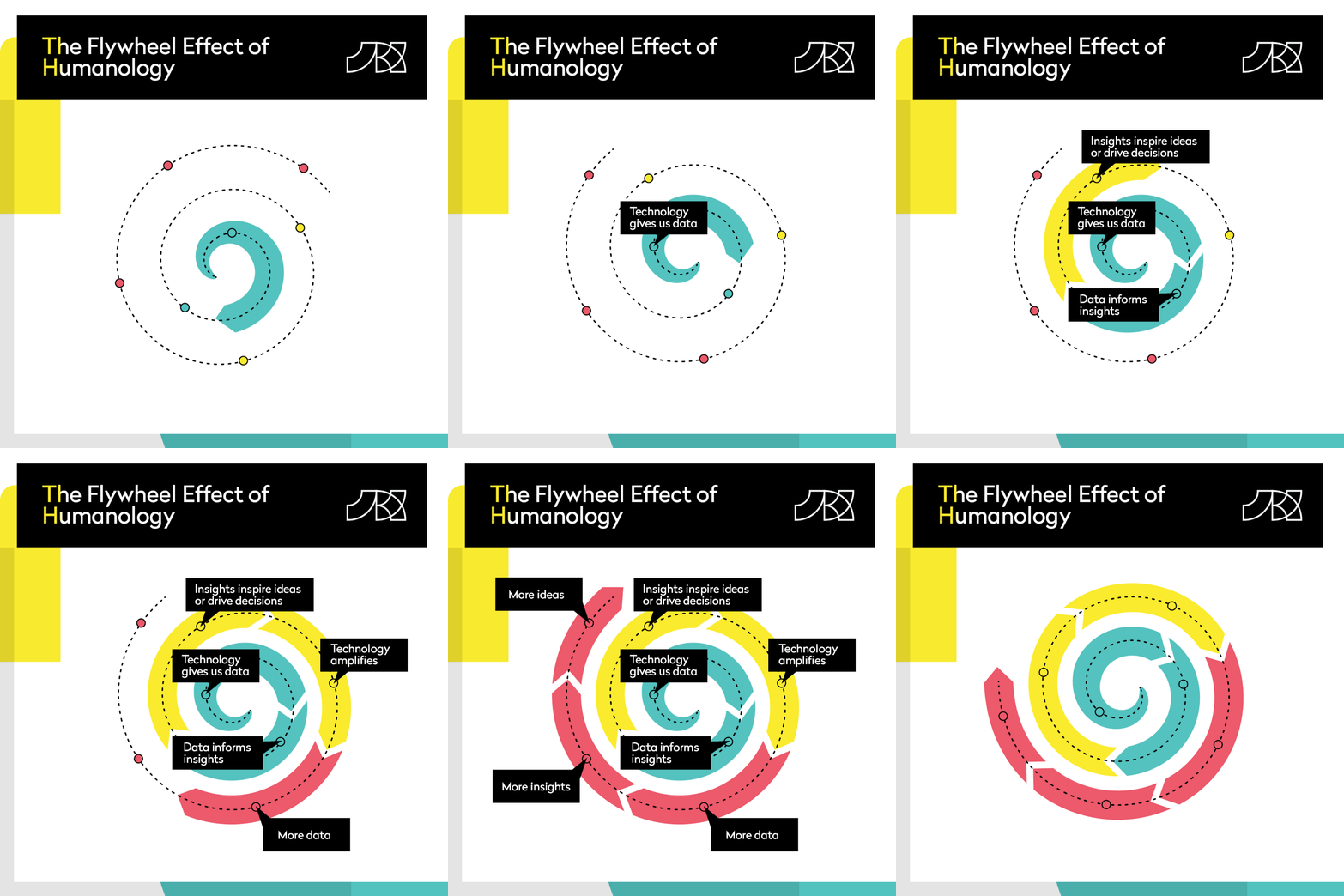
It takes time and effort to build a data-centric culture, and involves specific actions across different areas of an organization. A lot has been written on how to build a data culture – and you can dig into the 10 Steps to Building a Data-Driven Culture – but I believe that three main issues continue to hamper progress for many organizations:
#1. A lack of clear vision and direction resulting in an unfocused approach to digital marketing transformation.
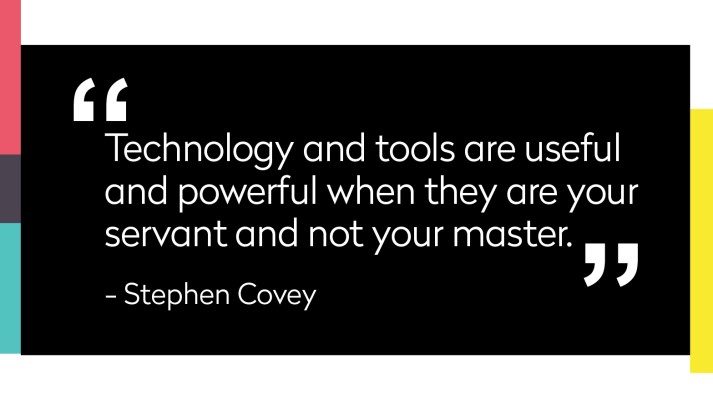
#2. An over-reliance on tools and tech and underinvestment in skill building.
#3. A tendency to overlook the basics – first-party data integrity/quality.
Here’s my point of view on how to overcome these common barriers.
Understand your current state of digital marketing maturity and where you want to get to.
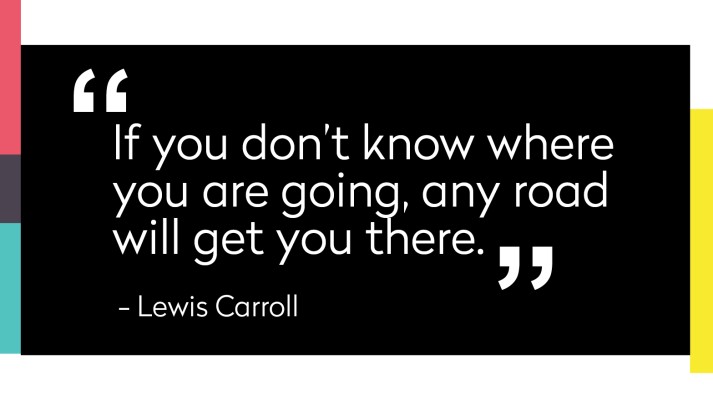
A few years ago, Google and Boston Consulting Group (BCG) created a digital marketing maturity model as a framework used to understand how digitally mature an organization is today, and to help build a roadmap for the future. The model consists of four stages:
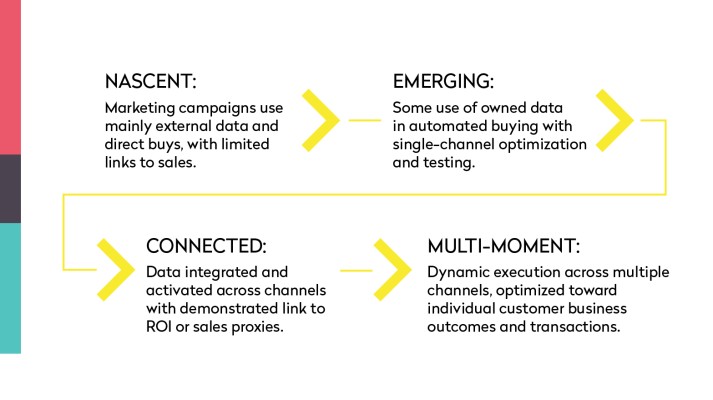
In a recent analysis of 200 global companies across multiple industries, BCG discovered that only 2% of businesses are true “multi-moment” marketers, with the rest fitting into one of three earlier phases of digital maturity. So, clearly, most marketing organizations still have some road to travel on their transformation journey.
To learn more about digital maturity, watch this. To find out where you stand today, you can complete Google & BCG’s Digital Maturity Benchmark for your organization right here.
Focus on building skills in data analysis & data storytelling.
Like all marketers, I love a good dashboard full of attractive visuals. In recent years, a proliferation of data visualization tools (i.e. Power BI, Tableau, etc.) has made it easier than ever for professionals without a data background to create graphics and charts. While this has primarily been a good thing, it’s given rise to one specific problem: meaningless or inaccurate data visualization. Just as well-crafted data visualizations benefit organizations that generate and use them, poorly crafted ones create problems. Here is a great article from HBS Online illustrating some of the perils of bad data visualization.
In order for data visualization tools to be truly valuable, we must first know what question we’re trying to answer, collect and structure the data in a clean manner and let the data answer it. To turn data into insights, we need our teams to be focused on data analysis.
Data analysis is where we examine, clean, transform and organize data with the end goal of extracting valuable information and using it to inform decisions and act. It’s important to note that contrary to popular belief, data analytics & data analysis don’t mean the same thing. Data analytics is the science of collecting and using data. It is everything between collecting raw data and taking action from it. Data analysis is a subcomponent of data analytics.
We also need to learn to tell better data stories.
Do we need to report the facts? Yes, of course. But this is table stakes. The real value comes when we can use insights to weave a narrative that drives action and makes a tangible impact. According to HBS Online, we need to be able to combine the “hard skills” of data analysis with the soft skill of data storytelling. This means knowing how to communicate the story it tells in a clear, compelling manner.
Neuroscientists have confirmed that when you package up your insights as a data story, you build a bridge for your data to the influential, emotional side of the brain. People hear statistics, but they feel stories.
This subtle but important difference pays dividends for data storytellers in a few key ways: memorability, persuasiveness and engagement.
What is a data story? A data story is a narrative constructed around a set of data that puts it into context and frames the broader implications. A data story brings these insights together with qualitative analysis and industry or domain expertise to better understand a relevant business goal or objective.
What is data storytelling? Data storytelling is the skill to craft the narrative by leveraging data, which is then contextualized and finally presented to an audience. It utilizes not only data analysis and statistics, but also data visualization, qualitative and contextual analysis and presentation. Data storytelling combines analytical rigour with the art of communication to engage, educate and influence stakeholders.
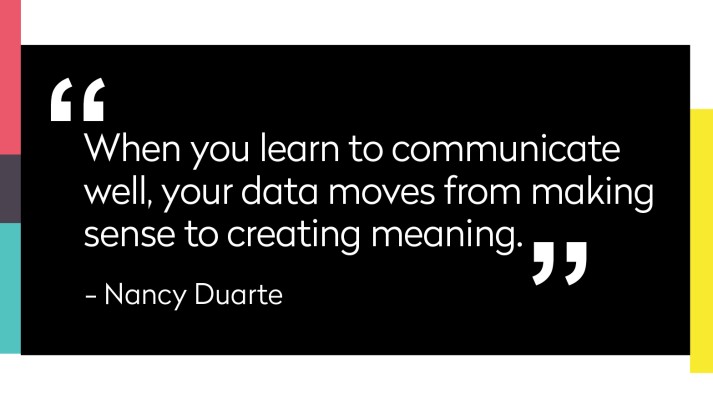
Learn how to improve your data storytelling skills with Nancy Duarte, a persuasion expert and author of six bestselling books including “DataStory: Explain data and inspire action through story”. She has cracked the code for effectively incorporating story patterns into business communications. Her videos are baked into online courses at Harvard, she lectures at Stanford University and her books are used at almost every top business school in the world.
Get the basics right: First-party data strategy, data integrity & quality
For as long as I’ve been in marketing, GIGO (garbage in, garbage out) has been a pain point—and I promise you every one of us has been personally victimized by bad data at some point. There are 2.5 quintillion bytes of data created each day and there will inevitably be mistakes – meaning bad, poor-quality data: information that is inaccurate, incomplete, non-formatted, irrelevant or duplicate.
It’s very easy to create inaccurate data. Maybe you made an online alias to download a quick PDF, or you might have a finsta account. Or maybe you just made a typo when submitting a form. IBM estimates the yearly cost of poor-quality data in the US is $3.1 trillion (that’s with a T!).
Why is good data more important than ever?
As we enter a cookieless world, having high-quality first-party data and a well-thought-through first-party data strategy is essential.
First-party data is data your company has collected directly from your audience, whether customers, site visitors or social media followers. Studies show that those using first-party data for key marketing functions achieved up to a 2.9x revenue uplift and a 1.5x increase in cost savings. Despite its clear benefits, however, most brands aren’t yet harnessing first-party data’s full potential.
Best-in-class brands develop a clear strategy for first-party data. They create organization-wide strategic goals to guide collecting and investing in such data. They also identify what data is essential (as opposed to merely nice to have), calculate associated costs and risks and develop an implementation roadmap.
At the same time, many are still struggling to achieve the level of data integrity and quality vital to data-centric organizations. Good data isn’t just crucial for making informed decisions, providing insights into performance and identifying opportunities for improvement. Consumers today also expect personalized experiences (61%).
Bad data doesn’t just hurt the reputation of marketers through their customer interactions. It also impacts the effectiveness of an organization. Forbes shared in 2016 that data scientists spend 60% of their time cleaning and organizing data. We need our limited data science experts doing higher-value work.
Who’s doing it right?

I’m falling back on some potentially tired examples here, but the truth is these companies are leading when it comes to becoming data-centric organizations. They know us as consumers and, as a result, they are getting closer to delivering that seamless, frictionless customer experience that we marketers are all striving for. They are harnessing the flywheel effect of Humanology.
Amazon: Collects customer information from its website, emails and other digital platforms to create highly personalized shopping experiences. It then uses this data to personalize product recommendations, suggest add-on items and optimize product search results, all of which help drive customer loyalty.
Spotify: Recommends curated playlists based on the user’s listening habits. The company started the annual “wrapped” trend with Spotify Wrapped in 2016, where it actually shares its first-party data back with users in a fun way that people look forward to each year.
Starbucks: Uses big data through mobile apps and reward programs that help the company gather insights directly from its customers to improve customer experience and personalize it. Data informs Starbucks’ decisions as to which products to offer, in what way to customize them and how to proceed with discounts and new customer targeting.
Netflix: Is famous for leveraging data to enhance the user experience with a preference-centric recommendation engine or user interface. It has also used data and predictive analytics to drive logical decisions about fresh content.
Where to start (if you’re not Amazon, Spotify, Starbucks or Netflix?) 😉
Becoming a data-centric culture won’t happen overnight, but it is possible to achieve even if you haven’t made much progress yet. Here’s how to get started:
#1. Understand where you are by completing the digital marketing maturity assessment that I shared above.
#2. Create a data strategy with clear goals. This article might help you get started.
#3. Encourage a data-first mindset at every level of the business.
#4. Put the systems and processes in place to ensure that you are collecting high-quality data.
#5. Iterate & improve as the data changes and as the tools you use to gather, store and process it evolve.
Want to unpack this some more? Let me know what you think your biggest barriers are.
More Blog & Insights
 " alt="" loading="lazy" role="presentation" />
Building Materials
3 B2B Contrarian Trends to Keep an Eye On
Jeff Lancaster of the B2B Institute at LinkedIn shares some top B2B trends for contrarian marketers.
Read more " alt="" loading="lazy" role="presentation" />
Building Materials
What You Risk When You Focus Solely on Lead Generation
There are risks when you focus your marketing efforts solely on lead generation. Learn what building materials brands can do to ensure lead gen success.
Read more " alt="" loading="lazy" role="presentation" />
Strategy
AI and Content Creation: The Real Reason Your Content Feels Generic
AI only scales what already exists inside your organization. If your strategy sounds like everyone else’s, the writing will, too.
Read moreNever miss another blog post
Want to sign up for updates, announcements, offers and promotions from Jan Kelley? Simply fill in the form below and we’ll keep you up to date. You may later withdraw your consent at any time. Check out our Privacy Policy.