The Integrated Era
How AI connects what marketing broke apart.
In a non-linear world, AI is the connective tissue linking brand, performance, and people. It’s turning fragmented marketing into a living, learning ecosystem.
Last issue, we explored how AI-powered Insight Engines turn raw data into meaning. Before that, we talked about how the wall between brand and performance is finally coming down.
In this issue, it all comes together. Because the real transformation isn’t about smarter tools or bigger data. It’s about integration. Marketing is finally starting to behave like the people it serves: connected, adaptive, and alive.
Welcome to the Integrated Era.
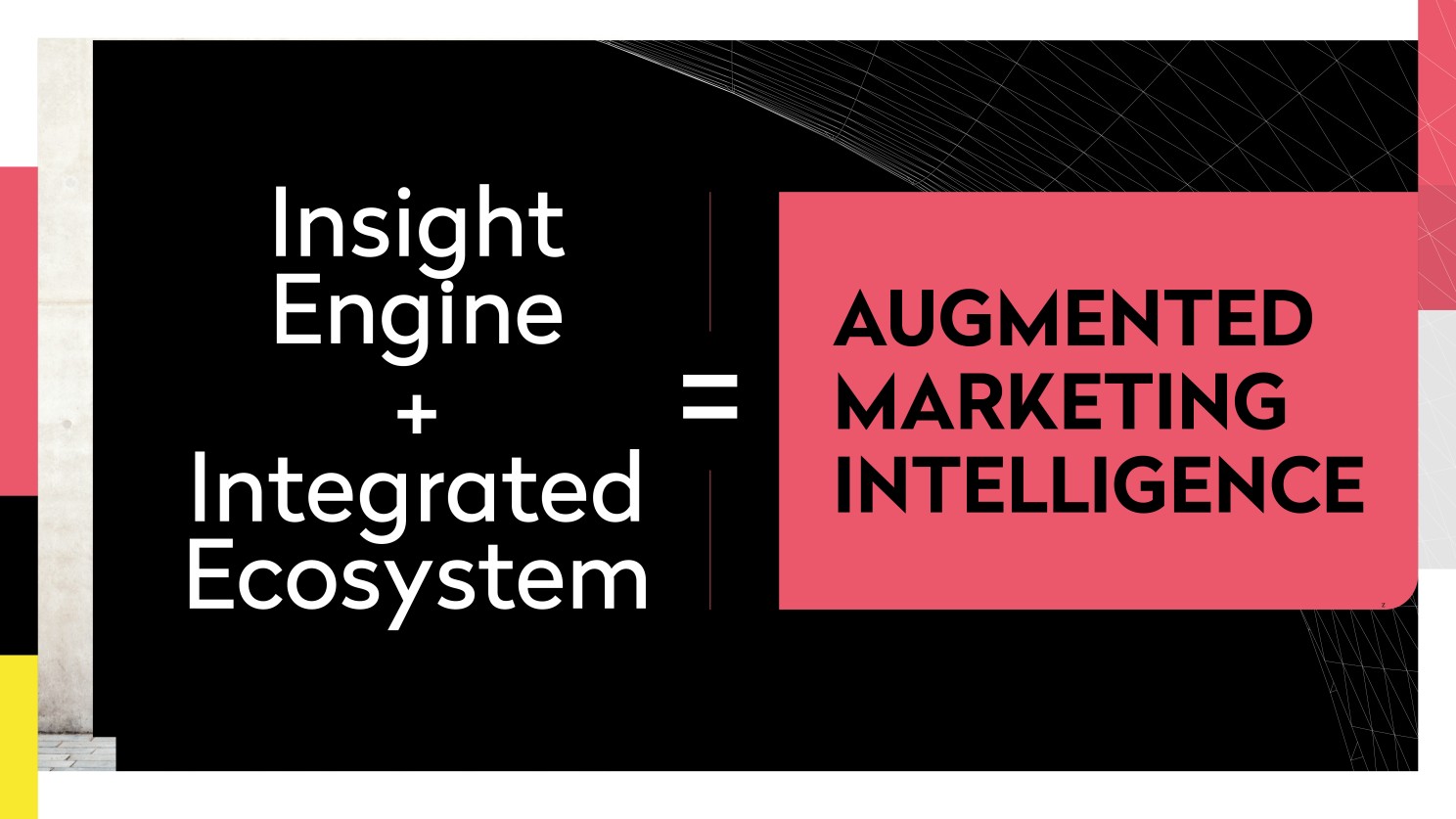
This is the next evolution of marketing intelligence. One where Insight Engines help us see, Integrated Ecosystems help us act, and together they create Augmented Marketing Intelligence that learns and adapts like a living organism.
From Fragmented to Flow
Different teams. Different KPIs. Different dashboards. Everyone chasing the same consumer but often in parallel universes.
And yet, the consumer journey itself has changed completely.
According to BCG and Think with Google’s latest work on the new consumer decision-making process, people no longer move neatly down a funnel. Instead, they loop through cycles of:
• Exploration: when they’re inspired and open
• Evaluation: when they’re comparing and deciding
Consumers don’t think in funnel stages. They think in moments.
They live in a loop.
If the journey is non-linear, marketing can’t be linear either. It has to act like an adaptive ecosystem where storytelling, performance, and data intelligence connect and learn together.
That’s the future I call the Integrated Era, powered by Augmented Marketing Intelligence.
AI as the Integrator (Not the Intruder)
When people talk about AI in marketing, the conversation often swings between excitement and anxiety. Some imagine perfect personalization; others, robots replacing creativity.
But the truth is more interesting and more human.
AI’s biggest power isn’t automation. It’s unification.
It’s the glue that binds all the moving parts of modern marketing:
• Creative and media
• Brand and performance
• Data and strategy
AI isn’t about efficiency. It’s about intelligence. It links the emotional side of marketing (storytelling) with the analytical side (signals).
It’s not about machines doing marketing for us.
It’s about machines helping marketing finally make sense.
A JK Example: When Integration Clicked
A few months ago, our team ran a campaign for a consumer products client launching a new line.
It looked simple on paper but complex in practice: multiple audiences, messages, and platforms, with pressure to demonstrate both brand love and sales lift.
Here’s where it got interesting.
We used AI not to replace creative or automate buying, but to align them.
We built an AI-powered integrated learning loop:
• Creative assets were tagged and tested across social, search, and video
• AI analyzed dozens of creative variations (colour, tone, pacing)
• In real time, it identified which stories drove engagement and which drove conversions
• Media spend was automatically reallocated based on what resonated, not what we assumed would
The result?
Creative that didn’t just look good, it performed. Performance that didn’t just optimize, it amplified the brand story.
From Funnels to Ecosystems
In the old world, we built funnels. In the new world, we build systems that learn.
Each stage (awareness, engagement, conversion, loyalty) feeds and strengthens the rest.
AI keeps the system alive:
• It senses signals across channels
• It connects storytelling with performance data
• It learns which messages move which audiences in which moments
The result isn’t a campaign. It’s a dynamic marketing system that evolves with every interaction.
From Ecosystems to Organizations
This kind of system-level integration isn’t just a marketing model, it’s becoming an organizational blueprint.
As Torrence Boone notes in Think with Google’s recent AI Transformation Playbook for CMOs, the brands leading this next era aren’t just adopting AI tools. They’re redesigning how marketing operates.
They’re building what Boone calls AI-first organizations (where creativity, media, data, and measurement move as one connected ecosystem).
“AI isn’t just another capability,” Boone writes. “It’s the connective fabric that links the full marketing value chain.”
That’s exactly what the Integrated Era represents: a shift from functional optimization to systemic intelligence, where insight, creativity, and execution continuously inform one another.
BCG’s Big Insight: The Loop Is the Opportunity
BCG and Think with Google call today’s customer journey “non-linear and dynamic.”
This is not a problem. It’s an opportunity.
Every loop through exploration and evaluation gives marketers new data, new insights, and new chances to connect.
AI captures those signals and translates them into next-best actions:
• Which messages to reinforce
• Which channels to lean into
• Which audiences are ready to move
AI helps marketing think like people do: curious, emotional, and constantly evolving.
It’s less about pushing people down a path and more about syncing our system to their rhythm.
From Insight Engines to Integrated Ecosystems
In our last edition, we explored how AI-powered Insight Engines help turn messy data into clarity, transforming raw signals into insight and understanding.
That was Step One: Knowing — understanding what’s happening and why.
In this issue, we’re talking about Step Two: Doing. This is about using that insight to power an Integrated Ecosystem, where strategy, creativity, and performance move together in real time.
Think of it like this:
• The Insight Engine helps you see clearly, turning data into meaning
• The Integrated Ecosystem helps you move fluidly, acting on that meaning through unified systems
• Together, they create Augmented Marketing Intelligence, a self-learning system that sees, learns, and acts as one
In other words: Insight Engines give you understanding. Integrated Ecosystems give you agility. And Augmented Marketing Intelligence gives you the ability to evolve continuously (powered by AI, guided by humans).
The Humanology Perspective
Here’s the paradox: The more automated marketing becomes, the more human it needs to be.
AI can analyze, optimize, and scale, but it can’t feel empathy, interpret culture, or define purpose. That’s our job.
Humanology is the balance between human-led strategy and AI-augmented execution. It’s how we build Augmented Marketing Intelligence that keeps empathy in the system.
When humans and machines play to their strengths, the result isn’t just efficiency. It’s intelligence with heart.
That’s the essence of the Integrated Era:
• Insight Engines to know
• Integrated Ecosystems to act
• Augmented Marketing Intelligence to learn, continuously
Three Shifts Defining the Integrated Era
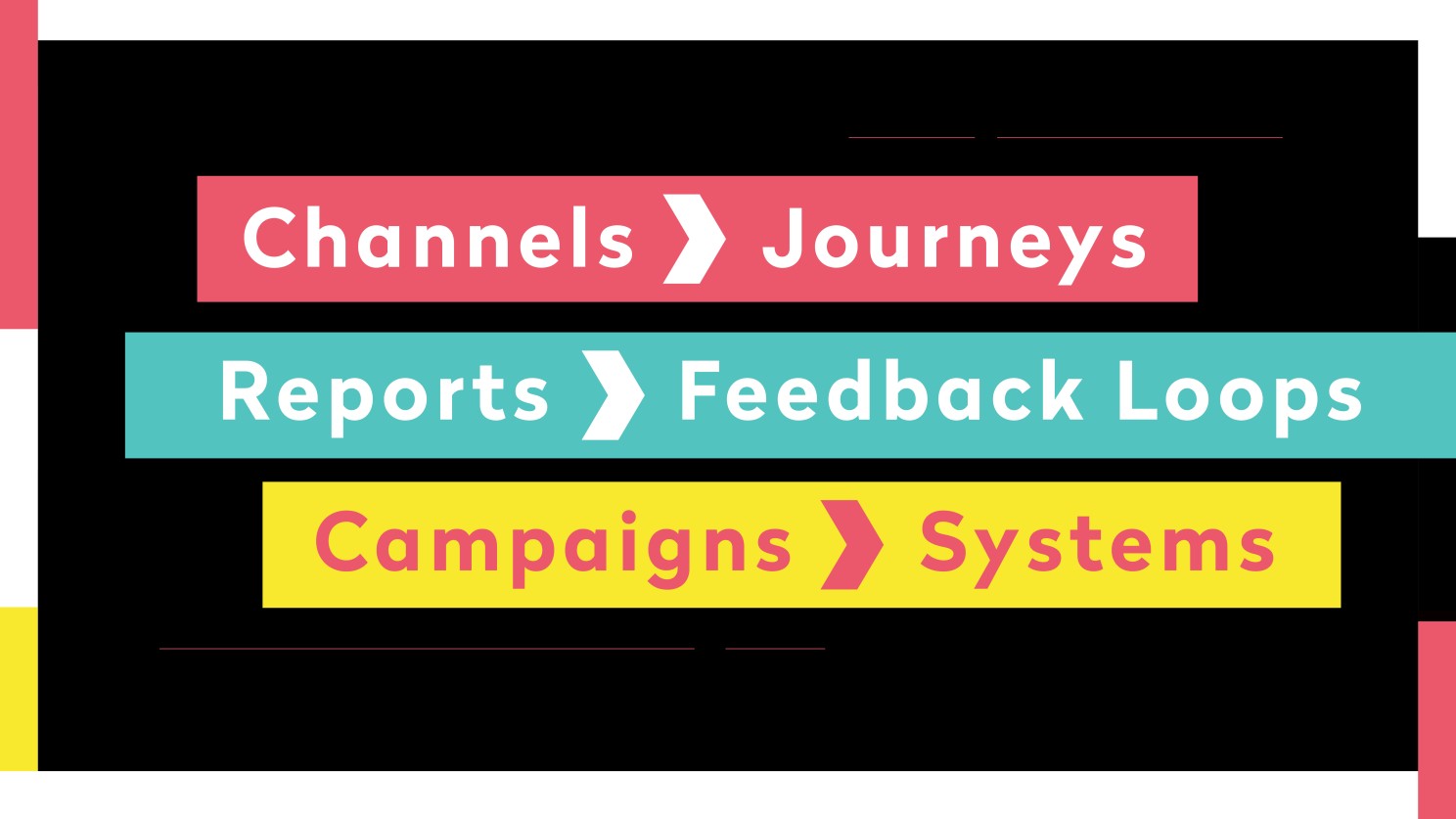
#1. From Channels to Journeys
The best teams don’t plan in silos. They plan around moments and use AI to orchestrate those moments across creative, media, and experience.
#2. From Reports to Feedback Loops
Dashboards tell you what happened. AI-driven systems learn from what happened and adapt automatically. That’s where the magic is.
#2. From Campaigns to Systems
Campaigns start and stop. Systems learn and evolve. The future of marketing isn’t just always-on. It’s always-learning.
What This Means for Marketers
Zoom out, and the pattern is clear:
AI isn’t just a tool. It’s becoming the operating system of marketing.
It’s dissolving the walls between brand and performance, data and creativity, awareness and action, and finally creating a marketing ecosystem that moves as fast and fluidly as the people it serves.
That’s the promise of the Integrated Era, powered by Augmented Marketing Intelligence and guided by Humanology.
Our JK Take
We’ve spent a decade optimizing. Now we get to focus on connecting. We get to reinvent how marketing works as a system.
Augmented Marketing Intelligence breathes, learns, and adapts. It’s powered by data, guided by human insights and creativity.
When we blend human insight with machine precision, we finally have what marketing has always needed: a complete picture of how people think, feel, and act.
And that’s something for marketers to be bullish about.
More Blog & Insights
 " alt="" loading="lazy" role="presentation" />
B2B
Winning B2B Marketing in 2026
B2B growth in 2026 will not be driven by better execution of the same playbooks. It will be driven by making clearer choices.
Read more " alt="" loading="lazy" role="presentation" />
Building Materials
What You Risk When You Focus Solely on Lead Generation
There are risks when you focus your marketing efforts solely on lead generation. Learn what building materials brands can do to ensure lead gen success.
Read more " alt="" loading="lazy" role="presentation" />
Automotive
Searching for More Powerful Human Insights? Start Here.
Marketers today need both creativity rooted in human insights AND technology that informs and then amplifies.
Read moreNever miss another blog post
Want to sign up for updates, announcements, offers and promotions from Jan Kelley? Simply fill in the form below and we’ll keep you up to date. You may later withdraw your consent at any time. Check out our Privacy Policy.