AI-Powered Insight Engines
How modern marketers turn data signals into decisions.

Marketers aren’t short on data. We’re short on direction.
Ask what “performed best” and someone says, “the dog meme.”
Cue more dog memes. 😉
In a world of faster cycles, non-linear buying journeys and more signals than human sensemaking can manage, the promise of insight-driven decision-making can feel more like noise than guidance. What we need is a repeatable way to turn signals into decisions. That’s an insight engine.
It’s not a tool you buy or plug in, but a human-led, AI-powered system you create, a skill you build and a process you run every week. It’s made of repeatable processes, shared language, and a productive partnership between humans and AI.
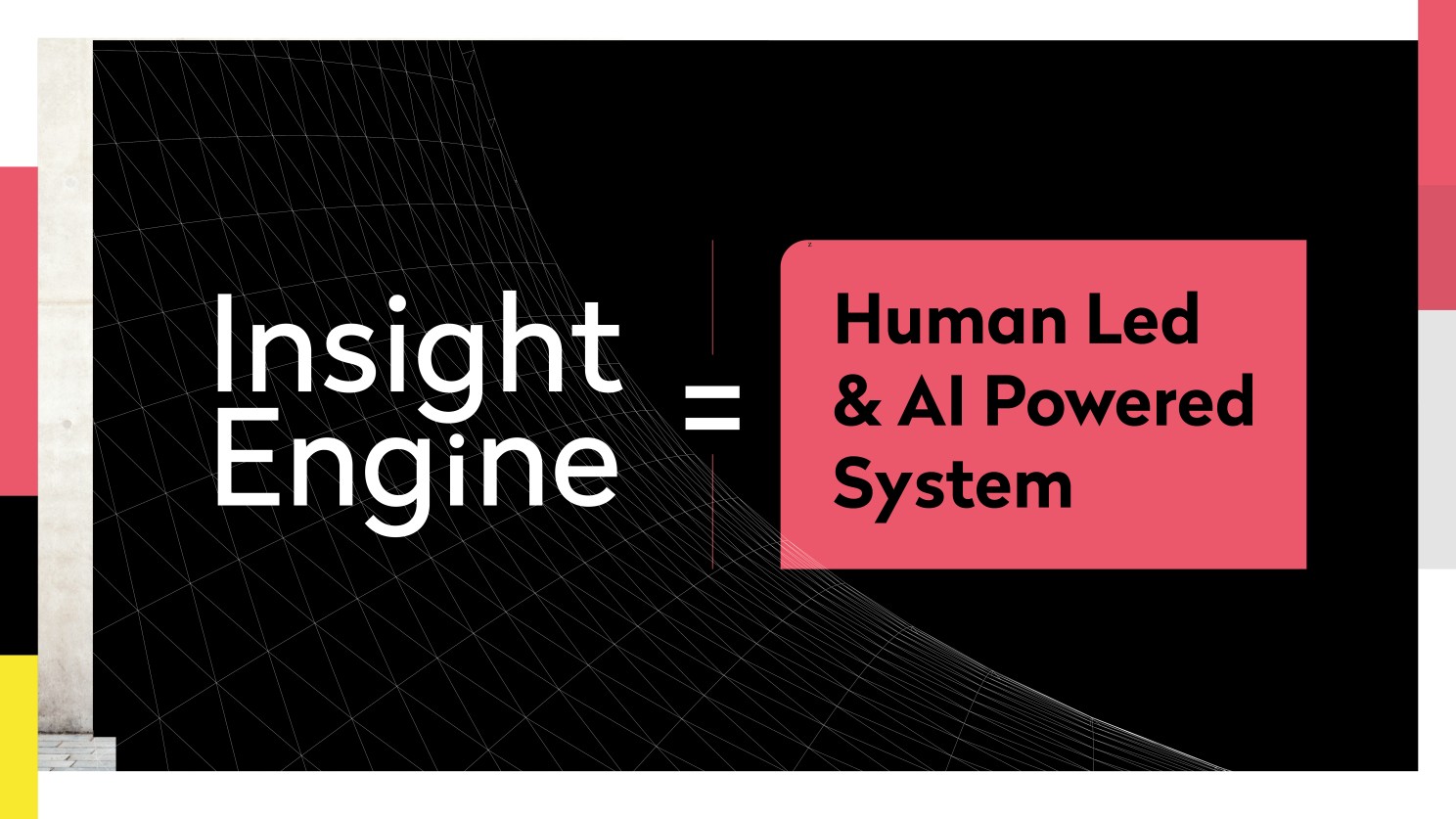
Think radar and captain: AI (the radar) scans constantly and whispers, “Look here.” Humans (the captain) choose the course. When you wire a few key inputs, ask sharper questions, and close the loop from finding → decision → shipped change, data stops being noise and starts steering the business.
AI tools don’t just help us make sense of what happened. They help us understand why it happened and what to do next. By revealing hidden patterns, surfacing unmet needs, and connecting disparate signals, they help turn data into direction. And when marketers pair this with smart questions and sharp instincts, data stops being overwhelming and starts becoming transformative.
At the centre of this is a new role for marketing: the orchestrator of insight. Marketers curate inputs, frame better questions, and turn patterns into direction for product, creative, sales, and service. AI is the always-on radar and co-analyst, surfacing patterns, trends, and human behaviours you’d otherwise miss. But machines don’t replace judgment. They amplify it. When humans ask better questions, AI reveals deeper answers.
What Counts As An Insight?
Let’s get crisp. An insight is:
• Non-obvious: It changes how you see the problem.
• Reliable: It holds up across data slices and time windows.
• Actionable: It points to a concrete decision or experiment.
Here’s a one-line test you can use: if it doesn’t change what we ship next, it’s not an insight. Let’s bring back the dog-meme example:
• Observation: “Dog-meme posts get more likes.”
• Insight: “Prospects with low prior category knowledge advance with step-by-step creative that reduces effort; aspirational headlines stall them.”
The latter is non-obvious, consistent across channels and tells your creative team what to do next. It’s an insight.
The Anatomy Of An Insight Engine
An insight engine is not a tool; it’s a stack of data, models, and rituals that repeatedly convert raw signals into decisions.
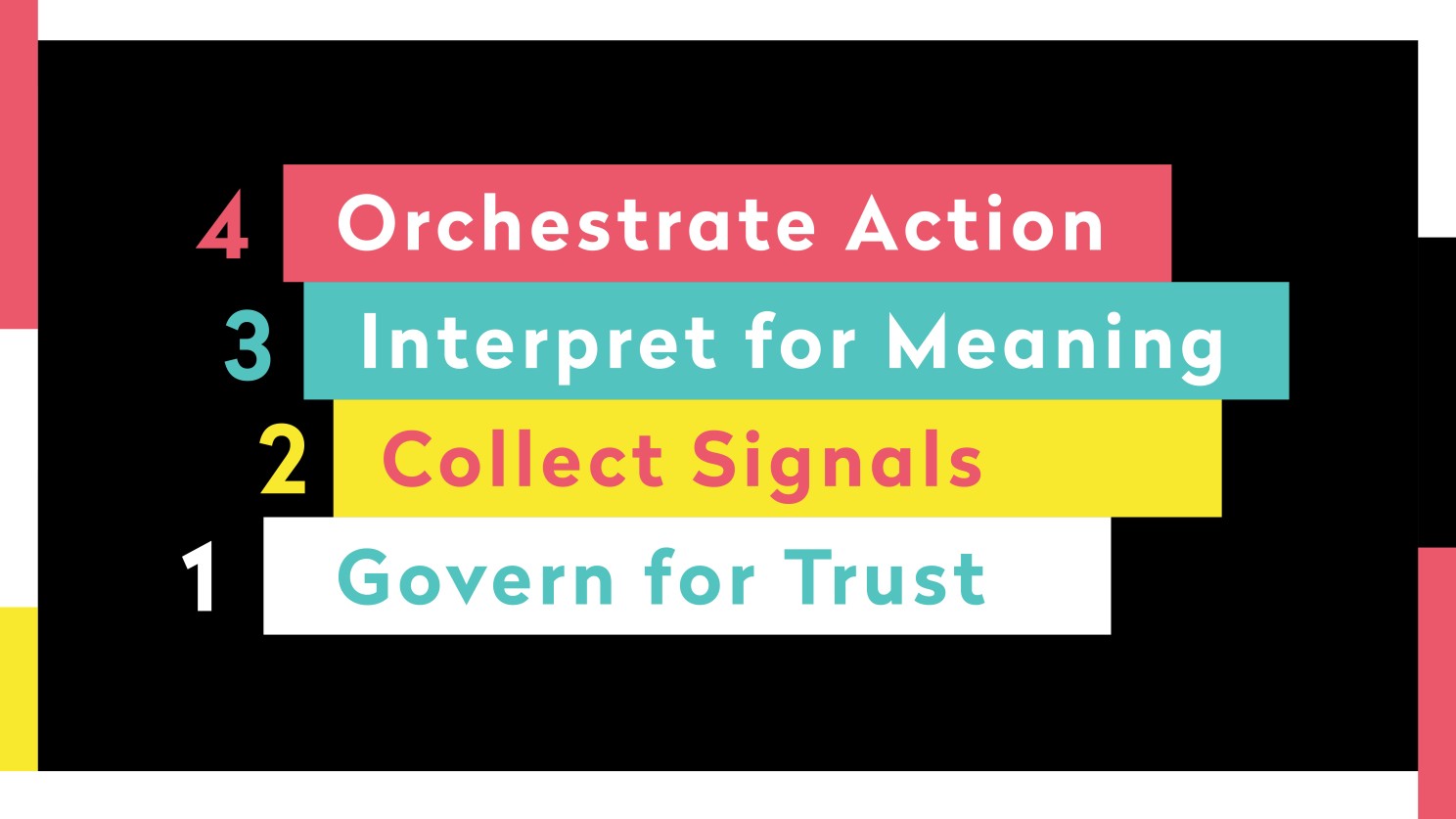
The Anatomy Of An Insight Engine
An insight engine is not a tool; it’s a stack of data, models, and rituals that repeatedly convert raw signals into decisions.
#1. Govern (Trust Layer)
Define shared definitions, such as what qualifies as a “qualified lead,” and publish consent and retention rules.
#2. Collect (Signals Layer)
Unify messy inputs, including search trends, site analytics, email events, paid media logs, CRM fields, support tickets, sales notes, and call transcripts, into a single accessible layer.
Standardize IDs, timestamps, and consent flags. Build the habit of tagging events with the same taxonomy across teams.
Watch out for adding sources faster than you add questions.
#3. Interpret (Meaning Layer)
Use models to detect segments, moments, and motivations, not just metrics.
This includes approaches like topic modelling on transcripts, clustering on behaviours, causal uplift models for treatments, and outlier detection for edge opportunities. The goal is pattern literacy, not dashboard decoration.
Watch out for correlation theatre.
#4. Orchestrate (Action Layer)
Translate insight into experiments, briefs, and frontline enablement.
This can include spinning up creative variants, adjusting offer logic, arming sales with “if you hear X, ask Y,” and updating onboarding scripts. Ship changes and watch impact roll back into the signals layer. Loop closed.
Watch out for ending meetings with screenshots instead of assignments.
From Metrics To Meaning
Dashboards answer what happened.
Insight engines answer why, so what, and now what.
As an MBA marketing instructor, I’ve been coaching aspiring marketers to do this for years. Now, the insight engine can help us pivot from performance reporting to true behavioural understanding.
This includes understanding segments, moments, motivations, and mechanisms.
Segments focus on who responds to what, and who never will.
Moments reveal when intent spikes and wanes by channel and context.
Motivations uncover which jobs-to-be-done, anxieties, and desired outcomes drive action.
Mechanisms show what actually causes lift, rather than correlation theatre.
For example, instead of saying “email open rate dropped,” your engine might surface this insight: “Opens fell 12 percent among new evaluators from partner referrals after day five, coinciding with a shift from ‘how-to’ to ‘what’s new’ content. Switching the day-five email to a ‘first-wins’ checklist restored engagement and increased trial completions by nine percent.” That is direction.
From Manager Of Marketing To Orchestrator Of Insights
This is where the marketer’s role evolves.
You’re no longer the person who owns the channel or pulls the report. You become the orchestrator of insight.
You curate inputs. You decide the questions. You bridge the worlds of models and messaging, turning patterns into briefs the creative team can use immediately and talking points the sales team can bring into calls tomorrow.
You don’t worship the dashboard. You run the process. You are the differentiator, the multiplier, the captain, not the tech.
Orchestrator of Insights means curating inputs, framing questions, and turning patterns into decisions others can ship.
What does that process look like? Picture a Weekly Insight Review that feels more like a newsroom than a status meeting.
The first ten minutes focus on what changed, where, and for whom. Then you move into the patterns. Not a flood of numbers, but a handful of contrasted scenes: a conversation that stalled and one that flew, a cohort that slowed and one that sprinted, a phrase that unlocked trust and one that triggered doubt.
You end with decisions: what will change, who owns it, and when you’ll know if it worked. People leave with assignments, not screenshots.
It Starts With Asking AI Better Questions
Never ask AI to find everything interesting. AI rewards specificity.
Here are seven must-answer campaign questions. Each is designed to trigger a concrete decision the moment you have the answer.
#1. Who are we moving this week, and at what moment are they deciding?
If answered, this changes segment inclusion or exclusion, geo and time windows, and frequency caps.
Prompt suggestion: Analyze last week’s data to pinpoint the single microsegment we can most move now and the exact decision moment. Return segment include and exclude rules, geo and time window, and recommended frequency cap.
#2. What single belief must shift for them to take the next step?
If answered, this changes the headline or value proposition, message hierarchy, and creative concept.
Prompt suggestion: From interviews, chats, and drop-off paths, extract the one belief blocking the next step and rewrite it as a before and after statement. Return headline or value proposition and message hierarchy.
#3. Which anxiety or friction blocks that step, and what proof removes it?
If answered, this changes proof points, social proof placement, and UX friction such as steps or form fields.
Prompt suggestion: Diagnose the top anxiety or friction at the specified step and match it to the minimal proof that removes it. Return proof type and placement, along with the specific UX change to ship.
#4. Which message frame most reduces time to first action?
If answered, this changes copy style, asset type, and the length and structure of landing pages or emails.
Prompt suggestion: Model past creatives to find which frame minimizes time to first action for the target persona. Return copy style, asset type, and page or email length.
#5. Where and when does intent spike for our core persona?
If answered, this changes channel mix, budget split, bid schedules, and creative format.
Prompt suggestion: Surface channel, format, and timing combinations where intent spikes for the target persona. Return budget split, bid schedule, and recommended creative format.
#6. What is the smallest next step that predicts revenue or retention, and what CTA or offer best drives it?
If answered, this changes CTA wording and placement, offer design, and the success metric for optimization.
Prompt suggestion: Identify the smallest next step that best predicts revenue or retention and the CTA or offer that most increases it. Return CTA wording and placement, offer design, and the optimization metric.
#7. What mechanism are we testing now, and what is the threshold to scale or stop?
If answered, this changes experiment design, guardrails, and go or no-go decisions.
Prompt suggestion: State the mechanism under test and propose an experiment with cells and sample size. Set scale and stop thresholds with guardrails and return a rollout plan.
Wire your data just enough to answer these questions. You don’t need twenty sources. Pick three that matter most.
Set a cadence, such as every Thursday afternoon, to tell the story of what you learned, what you’re going to do about it, and how you’ll know if it worked.
Pro tip: Name great insights after people to make learning social and sticky. Capture them in a one-page Insight of the Week covering context, finding, evidence, decision, and next test.
The AI Unlock: How AI Turns Data into Direction
AI turns raw signals into clear next moves by running a tight performance loop.
#1. AI scans the noise and spots the pattern
Feed it behaviour data, voice of customer inputs, and outcomes. Models cluster themes, flag anomalies, and reveal moments that matter you’d miss by eye.
#2. AI explains the why, not just the what
Instead of reporting that opens dropped on day five, AI links evidence to human motives, such as fear of breaking something before activation. That is a mechanism you can act on.
#3. AI translates the pattern into a decision
Turn the finding into one specific change with an owner and a metric. Rename “Tutorial” to “First Wins,” add a short reassurance walkthrough, or swap a message from news to next step.
#4. Ship and learn
Publish the change, measure the effect, feed results back into the model, and ask the next sharper question.

Remember, AI is your radar, not your captain. It surfaces patterns; you choose the course.
Humanology in Practice
At Jan Kelley, we’ve embedded Human-led, AI-powered insight engines into our JKAI platform, empowering strategy and creative teams with dynamic, data-informed direction.
For example, while working with a national home services brand, our system detected that customers who engaged with how-to video content were far more likely to convert during off-peak months. This unexpected insight allowed us to restructure both content sequencing and media spend, resulting in a 27% lift in seasonal engagement.
What made the difference wasn’t just the AI detection, it was our strategists’ ability to explore “why,” validate it with real customers, and translate it into creative decisions. In our Humanology model, insight doesn’t end with an output. It begins with human interpretation.
What To Do Now – And Next
This Week:
Write 7 key questions you want to answer in every campaign; make each question change a decision if answered.
Pick just 3 data sources (behaviour, voice of customer, outcomes); wire them together with a simple shared taxonomy.
Ask AI one focused prompt: “What anxieties stall people between demo and first success?” Use the answer to ship one small change.
Stand up a 60-minute Weekly Insight Review; end with two decisions, each with an owner, date, and metric.
Publish a one-page “Insight of the Week” (Context, Finding, Evidence, Decision, Next test).
This Month:
Backfill 3–6 months of transcripts, reviews, and call notes; cluster for themes and “switching moments.”
Map “moments that matter” across the journey and pair each with a message that reduces effort or risk.
Create a living Decision Log that tracks recommended actions, adoption, and outcomes.
Define guardrails: consent and retention policy, bias checks, explainability, and a human override.
Archive two dashboards that don’t feed decisions.
Always:
Start with better questions; never ask AI to “find everything interesting.”
Translate patterns into narratives others can use this week (creative briefs, sales talk tracks, onboarding tweaks).
Measure capability, not just outcomes: time-to-insight, decision adoption rate, and experiment velocity.
Name great insights after people to make learning social and sticky.
Close the loop: insight → decision → shipped change → observed effect → next question.
Closing Thoughts
Insight is no longer accidental. It’s intentional, iterative, and systemic. With AI doing the heavy analytical lifting and humans orchestrating the inquiry and interpretation, marketers are finally equipped to not just react to the market but to see around corners.
AI will keep getting faster at reading, clustering, and predicting. Our job is to keep getting better at asking, framing, and deciding. Be the orchestrator who turns signals into stories, stories into steps, and steps into tangible outcomes the business can feel.
Write your questions. Wire your basics. Tell your weekly story. Change one thing you can ship this week. Do that again next week. Direction doesn’t appear out of nowhere; it emerges from disciplined learning.
So here’s the real question: Are you still waiting for the next big insight to drop? Or are you building the system to find it?
Want to explore how Jan Kelley helps businesses build Human-led and AI-powered Insight Engines? Contact us to chat.
More Blog & Insights
 " alt="" loading="lazy" role="presentation" />
Automotive
Why Automotive Service Network Marketing Breaks When Capacity Is Ignored
Fix the disconnect between national campaigns and local operational reality to protect your brand and your margins.
Read more " alt="" loading="lazy" role="presentation" />
Building Materials
3 B2B Contrarian Trends to Keep an Eye On
Jeff Lancaster of the B2B Institute at LinkedIn shares some top B2B trends for contrarian marketers.
Read more " alt="" loading="lazy" role="presentation" />
Building Materials
Trade Show Tip Sheet
From seeing the latest innovations to networking with industry professionals, trade shows are an investment worth making. Whether you’re exhibiting or walking the floor, we want your trade show experience to be valuable, opportunistic and, above all, drive success.
Read moreNever miss another blog post
Want to sign up for updates, announcements, offers and promotions from Jan Kelley? Simply fill in the form below and we’ll keep you up to date. You may later withdraw your consent at any time. Check out our Privacy Policy.