Why imperfect, strange and sometimes downright ugly creative is making a comeback, and what brands should learn from it.
The Internet Is Getting Uglier. Is That Good News for Creative?

TL;DR
The internet is having an ugly phase. Rough edits, chaotic layouts, low-budget videos, absurd humour and intentionally imperfect design are challenging years of polished, carefully controlled brand creative.
And audiences seem interested.
But the lesson for brands isn’t to make uglier advertising. It’s to reconsider what makes creative effective in the first place. When everything looks professional, perfection stops being particularly interesting.
Great digital creative doesn’t have to look expensive, but it should look intentional.
When Did Looking Professional Become So Boring?
Something strange is happening to the internet.
Brands are making ads that look like they were shot on someone’s phone during a lunch break. Designers are embracing mismatched fonts, hand-drawn graphics and deliberately awkward layouts. Social media managers are posting things that would have been politely escorted out of a brand review five years ago.
And some of it is genuinely great.
After years of increasingly polished digital experiences, we’re seeing a growing appetite for creative that feels less manufactured.
It’s showing up in the research, too. Canva’s 2026 Design Trends Report declared this the year of Imperfect by Design, reporting a 527% increase in searches for lo-fi aesthetics and a 90% increase in searches for DIY-inspired design elements.
Even D&AD’s 2025 trend report identified a move toward intentionally scrappy, handmade and imperfect creative.
Apparently, the internet has decided it would like a little personality back.
The interesting question is why.
And, more importantly, whether brands can embrace imperfection without turning it into another highly managed creative trend.
The Problem With Everyone Looking Good
For a long time, the digital creative playbook was relatively straightforward.
Make it clean. Make it professional. Make it consistent. Make it look like the brand spent money on it.
None of that was inherently bad advice.
High production values can communicate quality, credibility and care. Beautiful creative still has enormous value.
But something changed when the tools to create beautiful things became available to practically everyone.
Templates democratized design. Smartphones made professional-looking video accessible. AI made it possible to generate polished imagery, layouts and content in seconds.
The floor for visual quality rose dramatically.
Which created an interesting problem.
When everyone can produce polished content, polish becomes less of a differentiator.
Consider your average social feed. Beautiful product photography. Carefully selected typography. Perfect lighting. Slick transitions. Another perfectly framed talking head explaining three things you need to know.
Individually, there’s nothing wrong with any of it.
Collectively, it can start to feel like one very long advertisement.
And the human brain is remarkably good at learning what to ignore.
When an audience becomes accustomed to a particular visual language, the unexpected can become more interesting than the technically impressive.
Sometimes a badly lit video with an excellent joke has more stopping power than a beautifully produced campaign with absolutely nothing to say.
Why Ugly Creative Can Be So Interesting
There’s a reason imperfect creative feels refreshing right now, and it goes beyond nostalgia for early internet aesthetics.
1. Imperfection Interrupts Expectations
We’re pattern-recognition machines.
When something looks like an ad, we recognize it as an ad. When something looks like the countless other pieces of content we’ve already scrolled past, it’s easy to keep scrolling.
But an awkward composition, unexpected visual, strange character or ridiculous opening line can disrupt that pattern.
This doesn’t mean ugly creative automatically earns attention. Plenty of ugly things are also boring.
The advantage comes from surprise. And surprise doesn’t need a particularly large production budget.
2. Personality Is More Interesting Than Perfection
Look at the increasingly absurd behaviour of brand mascots on social media.
Duolingo has turned its green owl into a chaotic internet personality. Scrub Daddy has embraced humour and an unusually playful relationship with its audience.
Their appeal isn’t rooted in beautiful production.
It’s rooted in character, consistency and a willingness to be a little ridiculous.
There is a recognizable personality behind the work. Audiences know what kind of humour to expect, while still being surprised by what comes next.
That’s a much more interesting creative achievement than simply following a visual trend.
3. Imperfection Can Make Creative Feel More Human
Think about the difference between a carefully staged product demonstration and a slightly chaotic video of someone genuinely using the product.
One might communicate professionalism.
The other might communicate familiarity, humour or credibility.
There’s something reassuring about recognizing the small imperfections of real life in what we see online.
It’s part of why behind-the-scenes footage, candid storytelling and creator-native content can be so compelling.
Of course, there’s a catch.
A video that looks spontaneous isn’t necessarily spontaneous. And audiences are perfectly capable of recognizing when a brand is trying very hard to look like it isn’t trying.
Which brings us to the problem with the whole ugly-creative movement.
You Can Manufacture Imperfection. You Can’t Manufacture Authenticity.
There’s an amusing contradiction emerging in creative departments.
Brands are spending considerable time and money making things look like they didn’t spend considerable time and money on them.
The carefully chosen ugly font. The strategically crooked composition. The art-directed mess. The video that’s been professionally edited to look unedited.
Sometimes this works brilliantly.
Sometimes it feels like authenticity cosplay.
In January 2026, The Business of Fashion documented the rise of cluttered, imperfect imagery among beauty brands and influencers, including messy bathroom counters and visibly used products replacing pristine arrangements.
The aesthetic signals something real and lived-in.
But once everyone starts recreating the same mess, the mess becomes a style.
And styles, by themselves, don’t make creative interesting.
This is where brands need to distinguish between three things:
- Looking authentic: Using visual cues associated with realness, spontaneity or imperfection.
- Being authentic: Behaving in ways that genuinely reflect the brand’s character and relationship with its audience.
- Being interesting: Having something distinctive, entertaining, useful or unexpected to communicate.
They’re not interchangeable.
You can look authentic and have absolutely nothing interesting to say.
You can produce something beautifully polished that feels deeply human.
And you can make something intentionally ridiculous that is unmistakably true to your brand.
The opportunity isn’t to choose between polished and unpolished.
It’s to choose creative approaches that actually serve the idea.
The JK Take: Good Digital Creative Doesn’t Always Look Expensive. But It Should Always Look Intentional.
Let’s give creative judgment a little more credit.
A genuinely good digital creative agency shouldn’t be attached to a particular aesthetic. It should be attached to making work that connects with an audience.
Sometimes that means gorgeous cinematography, exquisite design and meticulous production.
Sometimes it means googly eyes.
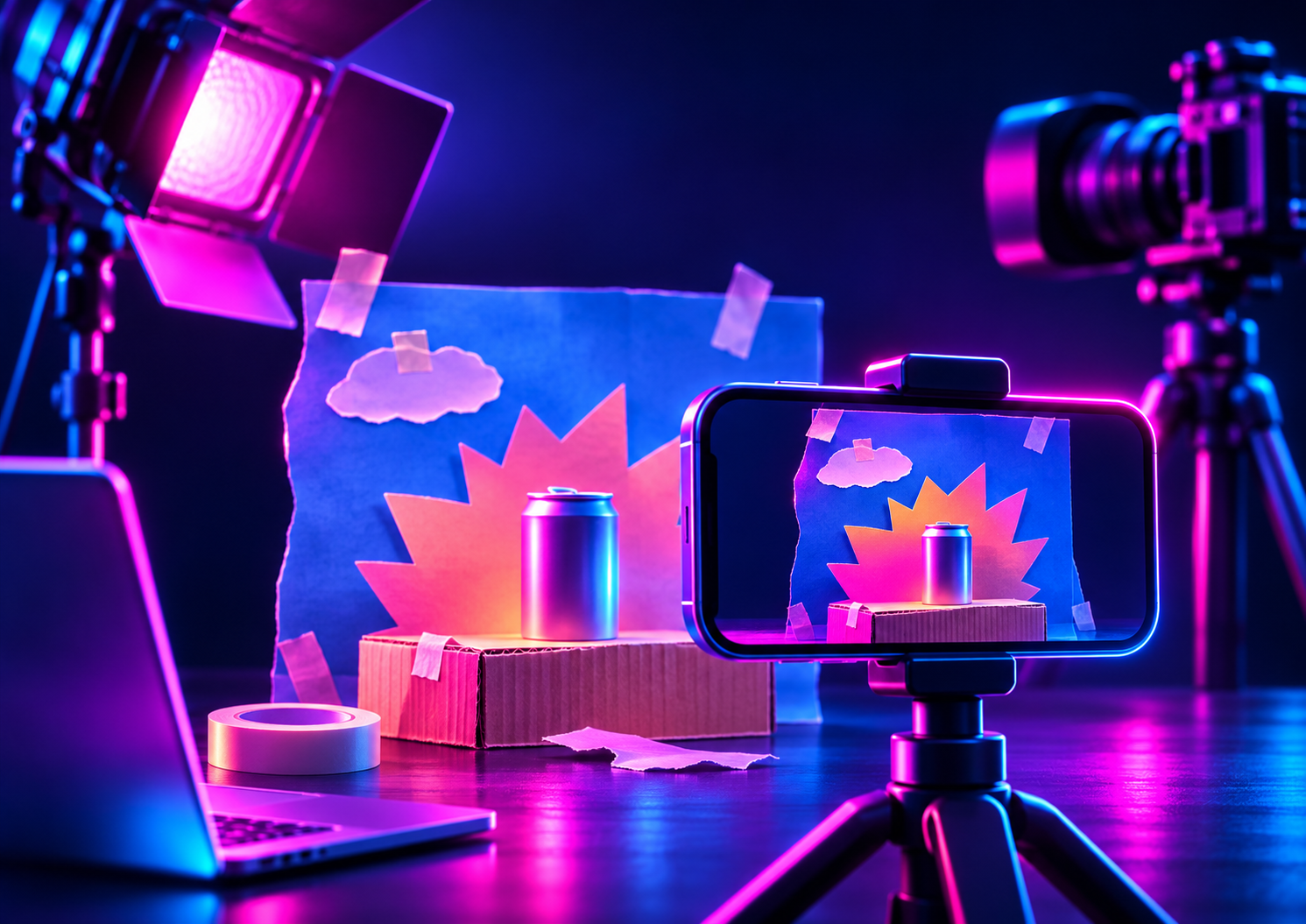
Take the 2026 “100% Beer” campaign for Half Batch Brewing, developed by Stereo Creative. Its absurd, social-first approach included beer cans with googly eyes placed in ridiculous scenarios.
The production aesthetic was simple. The thinking wasn’t.
The humour came from a clear creative idea, executed in a way that suited both the brand and the environments where people would encounter it.
That’s the distinction worth protecting.
Lo-fi is an aesthetic. Low-effort is a creative problem.
Deliberately imperfect work still needs craft. It needs timing, taste, an understanding of the audience and the confidence to know when a strange idea is worth pursuing.
And that last part is often where brands struggle.
The challenge isn’t necessarily coming up with something interesting.
It’s getting something interesting approved.
Would Your Creative Survive Its Own Review Process?
Imagine presenting some of today’s most recognizable social creative to a traditional brand committee before anyone knew it would work.
The feedback practically writes itself.
“Could we make it feel a little more premium?”
“Does this really align with our brand values?”
“I’m not sure the audience will understand the joke.”
“Can we make the product more prominent?”
“Maybe we should try something a little safer.”
These are familiar questions. And they’re not always unreasonable.
Brands have responsibilities. They need to protect their reputations, communicate clearly and avoid wasting money.
But when every creative decision is evaluated primarily on whether it makes someone internally uncomfortable, interesting work has a difficult time surviving.
The danger is confusing personal discomfort with audience risk.
A slightly strange idea might feel risky in a conference room precisely because it breaks the visual and behavioural conventions the team is accustomed to.
That doesn’t automatically make it good.
But it does make it worth asking why the idea feels uncomfortable.
Is it genuinely inappropriate for the audience? Does it undermine the brand? Or is it simply unfamiliar?
Those are very different problems.
And a good creative process should be able to tell them apart.
What Brands Can Learn From the Ugly Internet
The answer isn’t to fire your design team, abandon your brand standards or start adding Comic Sans to everything.
Please don’t do that last one. At least not without a very good reason.
Instead, the rise of imperfect creative offers a few useful principles.
1. Start With the Idea, Not the Aesthetic
Don’t ask your creative team to make something that looks more like TikTok.
Ask what would make your audience stop, care, laugh, remember or think differently.
The visual approach should follow the idea.
2. Know Which Brand Rules Are Actually Rules
Some brand standards protect recognition, clarity and trust.
Others are simply preferences that have become institutionalized over time.
Give your creative team room to distinguish between them.
3. Let the Platform Influence the Execution
A campaign doesn’t need to look identical everywhere.
A polished brand film and an intentionally scrappy social video can express the same personality in different ways.
Consistency of character matters more than identical production values.
4. Test Ideas That Make You Slightly Nervous
Not irresponsible ideas. Not ideas that compromise trust.
Ideas that challenge your organization’s assumptions about what good creative is supposed to look like.
Evaluate them with audience response, brand fit and performance evidence rather than internal taste alone.
And remember that attention isn’t the same thing as effectiveness. An unusual execution should ultimately help people remember, understand or choose the brand.
5. Don’t Turn Imperfection Into Another Formula
The quickest way to make ugly creative boring is to turn it into a mandatory creative direction.
Not every brand needs to be chaotic. Not every product needs an absurd mascot. Not every social post needs to look like it was made at 2 a.m.
Sometimes restraint is surprising.
Sometimes beauty is surprising.
Sometimes the most interesting thing a brand can do is speak plainly.
The point is to preserve the freedom to choose.
The Future of Digital Creative Isn’t Ugly. It’s Less Predictable.
The internet isn’t abandoning beautiful creative.
It’s making room for a broader definition of what good creative can look like.
As technology makes professional production easier and more accessible, the advantage increasingly comes from the thinking behind the work.
The observation nobody else has made. The joke that feels perfectly timed. The visual nobody expected. The idea that captures something true about the audience.
That’s what a good digital creative agency brings to the table: not just the ability to make things, but the taste and judgment to make things worth noticing.
And if that occasionally means making something a little ugly?
So be it.
The goal was never to make the internet prettier. It was to make something people care about.
Humanology Moment
Sometimes the thing that makes someone stop scrolling is the very thing that makes a brand manager slightly uncomfortable.
People don’t experience creative through the same lens as the people approving it. They’re not checking a brand guideline or evaluating production values. They’re deciding, often in a fraction of a second, whether something deserves their attention.
The best creative understands that difference.
Because good judgment isn’t always about making things safer.
Sometimes it’s about recognizing when something unusual is exactly right.
Leadership Takeaways
- Professional-looking creative is easier to produce than ever. Distinctiveness is not.
- Imperfection can create surprise, familiarity and personality, but it doesn’t guarantee authenticity.
- Looking authentic and being interesting are different creative achievements.
- Strong creative ideas should determine production choices, not the other way around.
- Brand consistency should protect identity without eliminating creative experimentation.
- The most effective digital creative balances audience understanding, craft and the confidence to do something unexpected.
More Blog & Insights
 " alt="" loading="lazy" role="presentation" />
Building Materials
The Influencer Space Has Changed: Now There’s Something for Every Building Materials Brand
Our perspective on social media influencer marketing and how brands in the building materials industry can start envisioning their own program.
Read Article " alt="" loading="lazy" role="presentation" />
Building Materials
Does Your Building Materials Brand Have a Place on TikTok?
See how building materials brands can jump on the TikTok bandwagon and connect with audiences in a new way.
Read Article " alt="" loading="lazy" role="presentation" />
Building Materials
5 Tactics to Better Understand Your Customers, Without the Guesswork
Many building materials brands will say they know their customers. And of course they do. They know their titles, roles and responsibilities. But knowing your customers isn’t enough to get selected. Understanding them is.
Read ArticleNever miss another blog post
Want to sign up for updates, announcements, offers and promotions from Jan Kelley? Simply fill in the form below and we’ll keep you up to date. You may later withdraw your consent at any time. Check out our Privacy Policy.